Creative Leadership & Team Performance
Stakeholder Satisfaction
Stakeholder feedback pointed to real friction. Turnaround times were a concern, prioritization felt opaque, and nearly a third of marketing partners described their relationship with Creative as transactional. That perception limits how much influence a creative team can have inside an organization.
My Approach
I made stakeholder trust a deliberate, measurable objective. I lead the team as we strategically adjusted our resources, overhauled our communication, tightened our intake and delivery processes, and reoriented the team around partnership rather than production.
Every single satisfaction metric improved year over year. Timeliness of delivery jumped nearly 29%. Communication and responsiveness reached a perfect 5.0. The share of stakeholders who described the creative team as collaborative and highly strategic doubled to 50%, while the number who saw us as transactional dropped to zero. The percentage rating our request process as very easy and efficient went from 36% to 92%.
Scores like that do not happen by accident. They reflect a team that was challenged to grow and led through a genuine cultural shift in how they show up for the business.
YoY change in stakeholder satisfaction
Delivery Speed
+29%
Responsiveness
5/5
Collaborative Relationship
+85%
Ease of Getting Creative Support
+155%
Team Dashboard
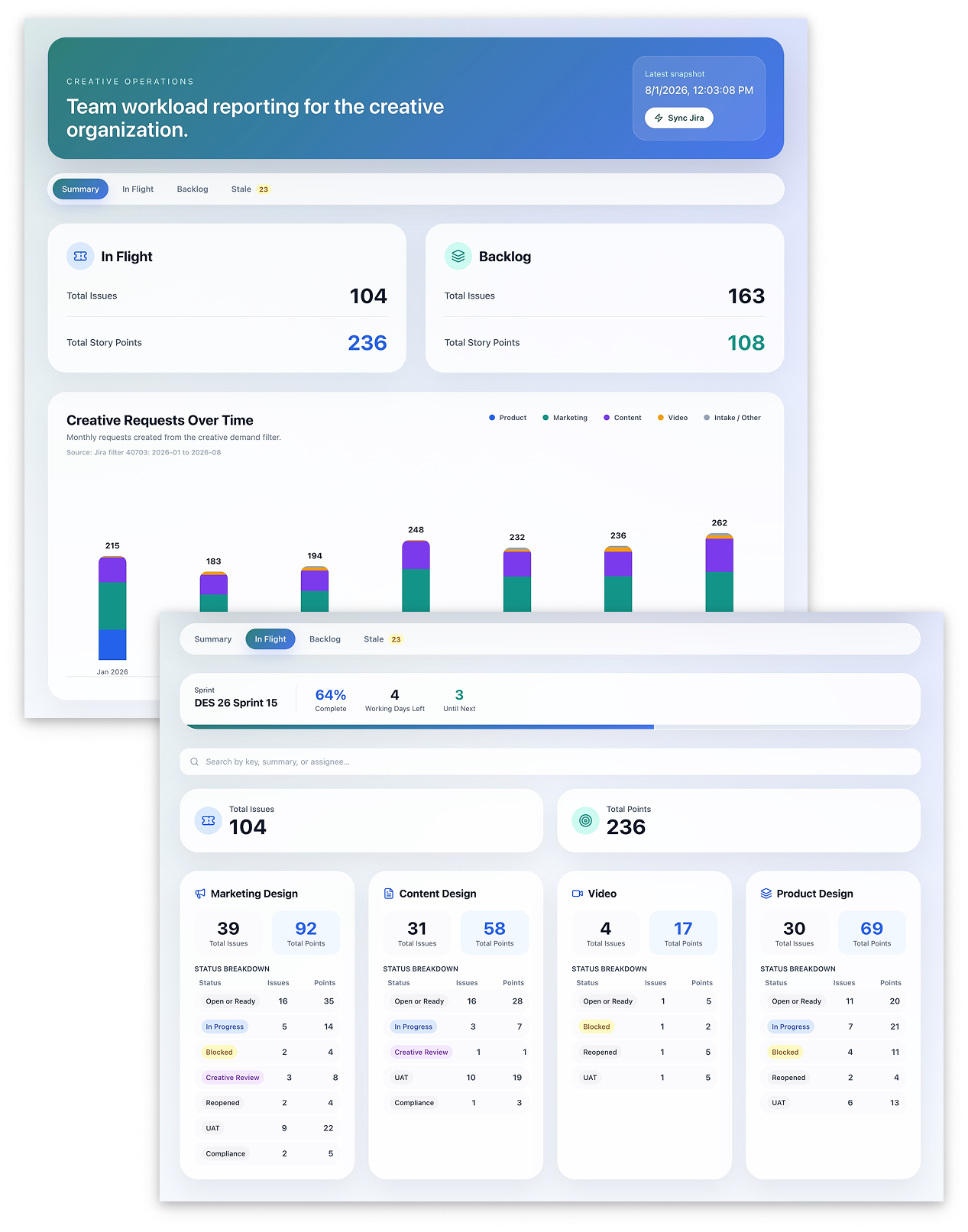
Managing a creative team at scale means holding a lot of information in your head at once. Who is working on what, where the bottlenecks are, which workstreams are understaffed, and whether the backlog is growing faster than the team can absorb it. For a long time, getting that picture meant pulling reports manually, chasing down updates in standups, or living inside Jira in a way that was neither efficient nor scalable.
My Approach
Using AI, I built a custom team workload dashboard by connecting an AI tool directly to our Jira instance and configuring it to surface exactly the data I needed as a creative leader. The result is a live reporting layer that gives me an immediate, comprehensive snapshot of where every team member stands, what is in flight, what is sitting in the backlog, and how demand has trended over time across the business.
What this gave me was something most creative leaders do not have: the ability to make resourcing and prioritization decisions grounded in real data. This was not an off-the-shelf solution. I identified the gap, designed the logic, and built the tool. That is the kind of operational thinking I bring to creative leadership. Not just managing the work, but building the systems that make the work manageable.
Sprint Reporting
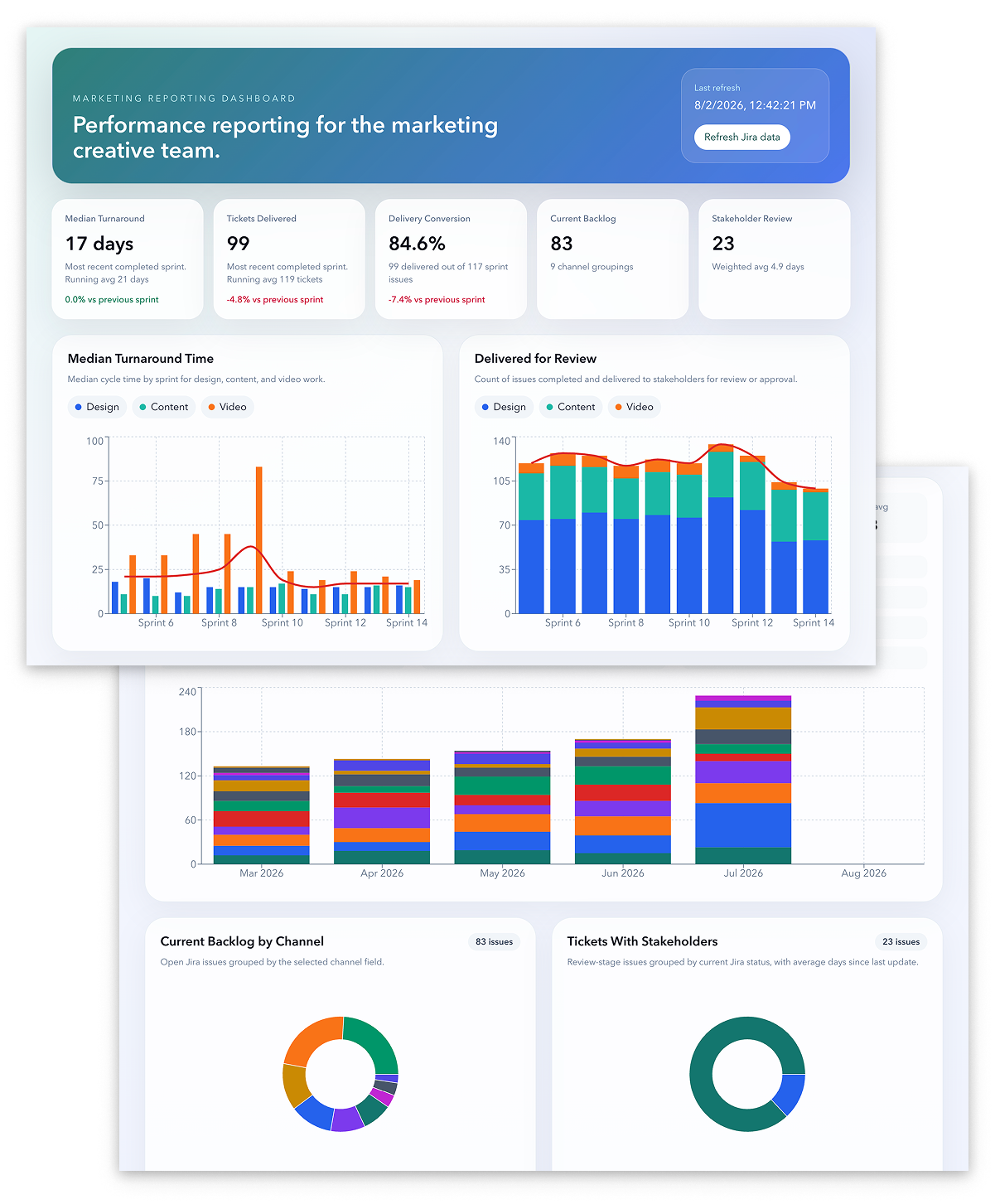
Marketing creative teams operate under a different kind of pressure than most. Performance marketing runs on volume and velocity. Campaigns need fresh creative constantly, across multiple channels, at a pace that does not slow down for manual reporting. Yet despite how much output is expected, creative leadership is often asked to demonstrate team performance without easy access to the data that tells that story. How quickly is work getting done? Are we delivering what we commit to? Where does work stall? These are questions senior stakeholders ask frequently, and answering them with real data can be difficult.
My Approach
I built an AI-powered sprint performance dashboard that gives leadership a real-time view of exactly how the team is delivering against the demands of performance marketing.
By connecting an AI tool directly to our Jira data, I created a live reporting layer that tracks the metrics that matter most in a high-volume creative environment: median turnaround time by discipline, tickets delivered per sprint, delivery conversion rate, current backlog, and work sitting with stakeholders for review. Every number is benchmarked against the prior sprint so trends are immediately visible.
This dashboard means I can walk into any leadership conversation with current, credible data, spot delivery issues before they affect campaigns, and make resourcing decisions based on real demand signals rather than instinct.
Team Handbook
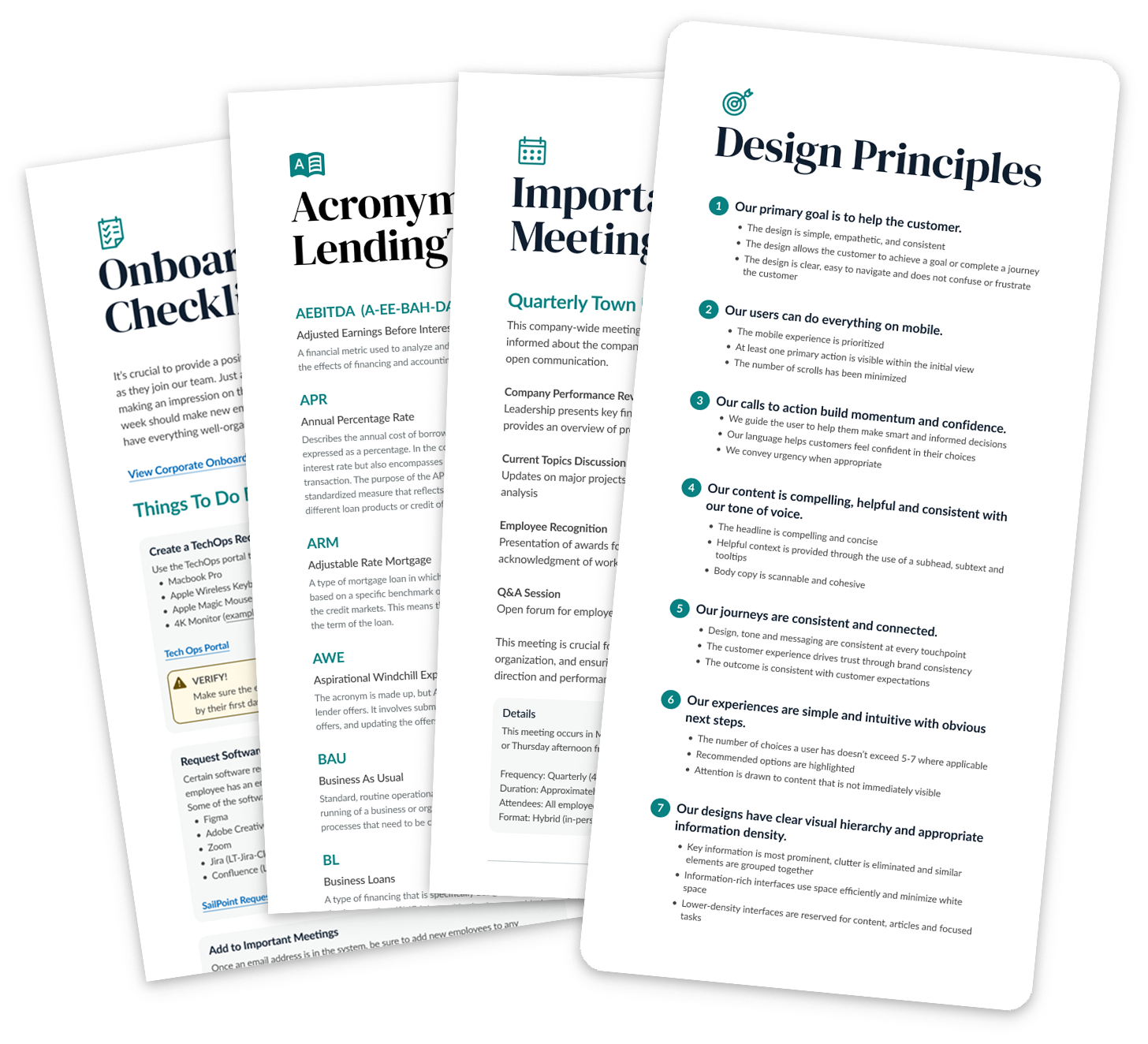
When I stepped into the head of creative role, the team had no real onboarding infrastructure. New employees found their footing through scattered documents and institutional knowledge that lived only in people's heads. For managers, there was no centralized place to understand what needed to happen when someone new joined our team.
My Approach
I created a comprehensive Creative Team Handbook, built and housed in Figma so it is accessible to everyone on the team at any time and can be updated the moment something changes.
The handbook covers everything a new employee or manager needs to orient quickly: the creative org chart, how the product and marketing organizations are structured, key executives and GMs, team principles, important recurring meetings, an acronym dictionary, platforms and software, and a dedicated onboarding checklist for managers.
The result is a single source of truth that removes the guesswork from joining a complex, fast-moving creative organization. New hires get a genuine lay of the land on day one. Managers know exactly what they need to do. And the team benefits from documentation that stays current rather than going stale in a folder somewhere.